E-bike weight: How much does an e-bike weigh?
How much does an e-bike weigh? And what do the individual components weigh? In this blog article, we answer all your questions about e-bike weight. |
Frame and fork: the basis for every lightweight e-bikeThe frame and fork form the basic structure of an e-bike. High-quality materials such as aluminium or carbon are often used to reduce weight. The Kalkhoff Endeavour L Excite has an aluminium frame that is comparatively light but still very robust. The frame weighs 3,350 grams, the aluminium rigid fork 1,300 grams. If we include other components belonging to the chassis, such as the headset and the brake mounts, we reach around 5,300 grams. |
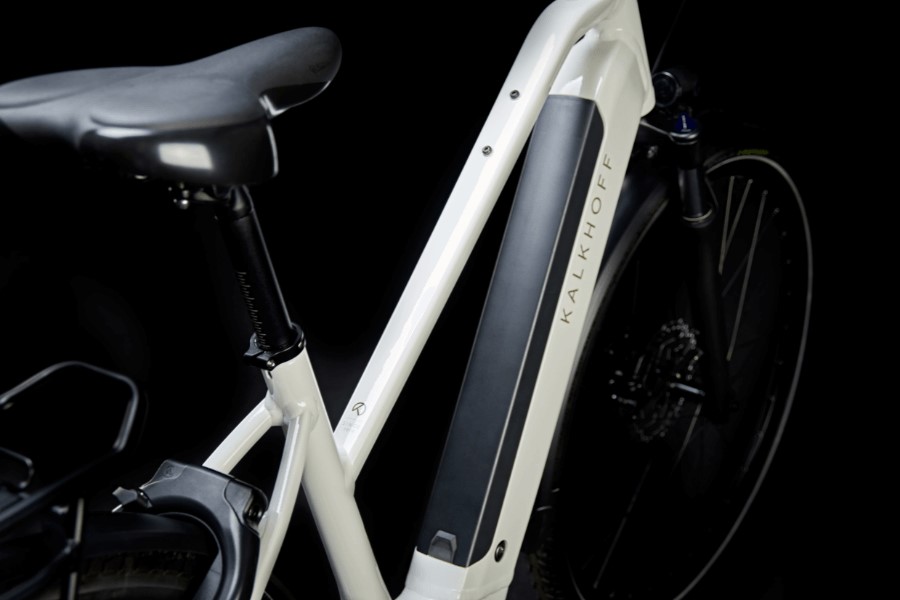
Drive & battery: The weight of the electric componentsThe Endeavour L Excite is a lightweight e-bike that is perfectly suitable for everyday use. That's why we have equipped it with an electric drive that is compact yet powerful. The Bosch Performance Line SX motor delivers a torque of 55 Newton metres, but still only weighs around 2,000 grams. The e-bike battery weight of the 400-watt-hour battery is also around two kilograms. There is also the battery cover, the motor cover, cables, the charging connection, the e-bike display, and other small parts. The total weight of the E-System is therefore around 5,150 grams. |
Wheels: Light but robustWheels also play a crucial role in the overall weight of an e-bike. Here, too, we rely on lightweight, high-quality aluminium for the Kalkhoff Endeavour L Excite. The rims come from the Swiss quality manufacturer DT Swiss, which we have combined with hubs from the Japanese company Shimano. Tyres, inner tubes, spokes and brake rotors are also part of the e-bike wheel. We therefore add the weight of these individual parts to the wheels. The total for these parts: 3,700 grams. |
Cockpit: This is how much the handlebars and stem etc. weigh.The cockpit of an e-bike comprises the handlebars, stem, grips, and other controls such as the gear levers. We also use high-quality aluminium components for the Kalkhoff Endeavour L Excite. The motto: save weight without compromising stability. The handlebar weighs 300 grams and the stem weighs 400 grams. The ergonomic grips from German specialist manufacturer Ergon weigh around 250 grams. The cockpit weighs a total of 1,050 grams. |

Gear shift group: This is what the gear shift weighsThe gears also influence the weight of the e-bike. With the Endeavour L Excite, we rely on the Shimano XT groupset, which is not only reliable but also offers a wide range of gears for every riding situation. The entire drivetrain including front derailleur, rear derailleur, cassette, chain and crankset weighs around 1,900 grams. |
Components: saddle, seatpost and other partsIn addition to the main components, smaller parts such as the saddle, seat post and pedals also play a role in e-bike weight. The saddle of the Kalkhoff Endeavour L Excite - the Essenza from the Italian company Selle Royal - weighs 350 grams. The carbon seatpost weighs 250 grams and the pedals around 240 grams. There are also other parts, such as the lighting from Finnish manufacturer Herrmans. Together, these components contribute around 950 grams to the total weight. |

Screws and paint: they also contribute to the overall weightIt is the small details that are often overlooked. But they also contribute to the overall weight of an e-bike. All screws, cables and covers add up to around 400 grams. Painting the frame adds a further 200 grams. These components may seem small, but they are essential for the functionality and appearance of the bike. |
Accessories and small parts: Small but powerfulSmaller accessories such as the pannier rack and the kickstand also contribute to the overall weight. The sturdy MIK standard aluminium luggage rack weighs around 620 grams, while the mudguards come to 320 grams in total. The kickstand weighs a further 300 grams. Together with the remaining small parts such as screws, cables and covers, we come to a total weight of around 1,250 grams. By the way: Our stylish mini bell from Knog weighs a mere 17 grams. |
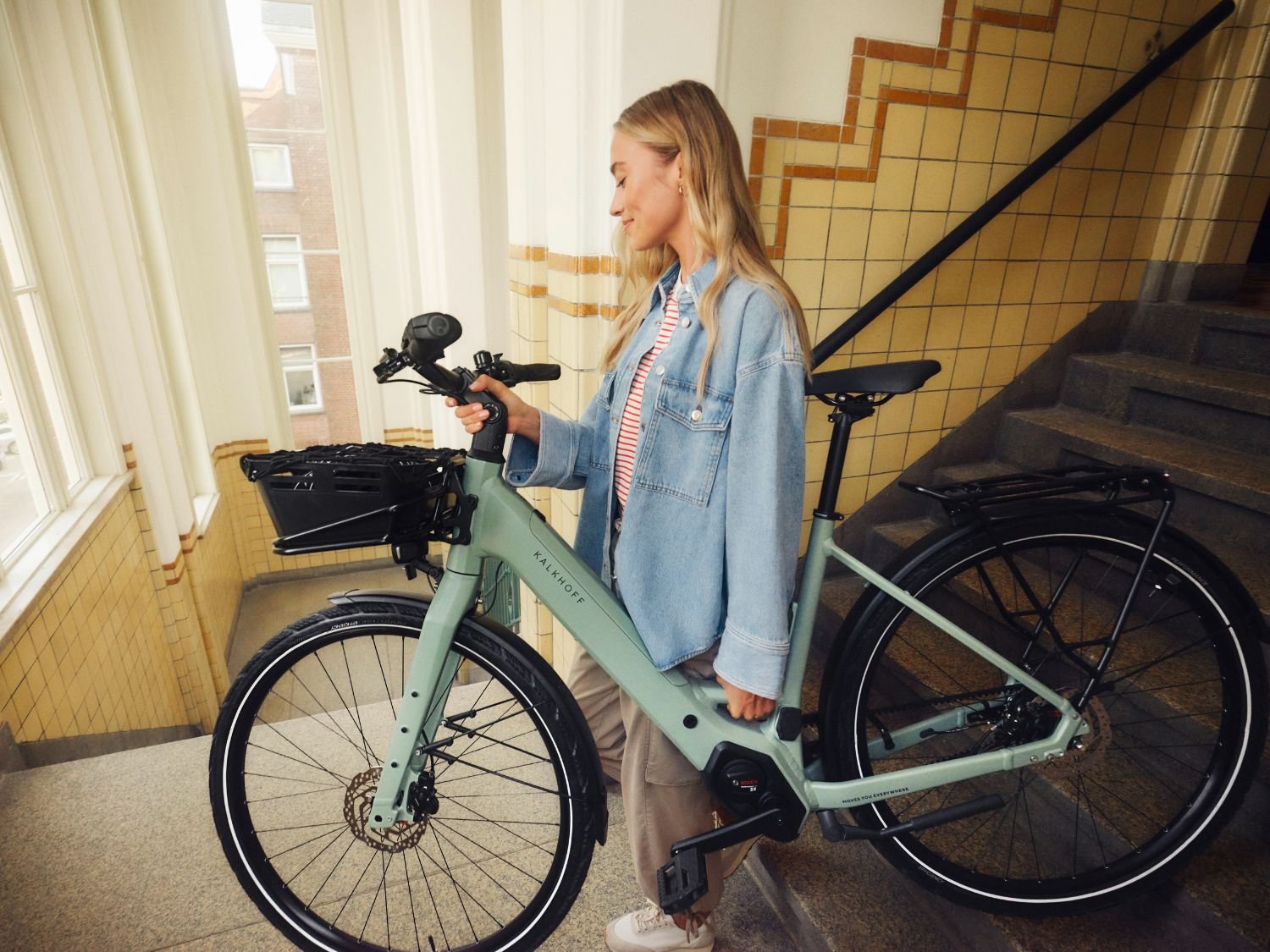
Table: E-bike weight Kalkhoff Endeavour L ExciteOur overview shows: The weight of an e-bike depends heavily on the components and materials used. However, the Kalkhoff Endeavour L Excite is the best proof that it is possible to build a lightweight yet robust e-bike despite the additional electric components. With a total weight of just under 20 kilograms, it offers a balanced combination of performance and suitability for everyday use. |
COMPONENT | WEIGHT |
|---|---|
Chassis (frame, fork and associated parts) | 5,300 grams |
Wheels (rims, hub, tyres and associated parts) | 3,700 grams |
E-bike system (drive, battery, display and associated parts) | 5,150 grams |
Cockpit (handlebars, stem and associated parts) | 1,050 grams |
Groupset (gears and associated parts) | 1,900 grams |
Components (saddle, seat post, pedals and other parts) | 950 grams |
Accessories (pannier rack and associated parts) | 1,250 grams |
Small parts (screws, cables, sleeves, etc.) | 400 grams |
Paint | 200 gram |
Total | 19,900 grams |
How much should my e-bike weigh?Regardless of our example, the weight of your e-bike will vary depending on how powerful you want your e-bike to be, which motor you choose and what material the frame is made of. When buying, you should pay attention to the permissible total weight for your electric bike. The permissible total weight of an e-bike is often between 120 and 130 kilograms. So if you factor in the weight of the rider and luggage in addition to the weight of your pedelec, the permissible total weight can quickly be exceeded. As a result, Kalkhoff pedelecs have an inherently higher permissible total weight of up to 170 kilograms. This means you can easily transport additional weight such as shopping or a bike trailer on your e-bike. |
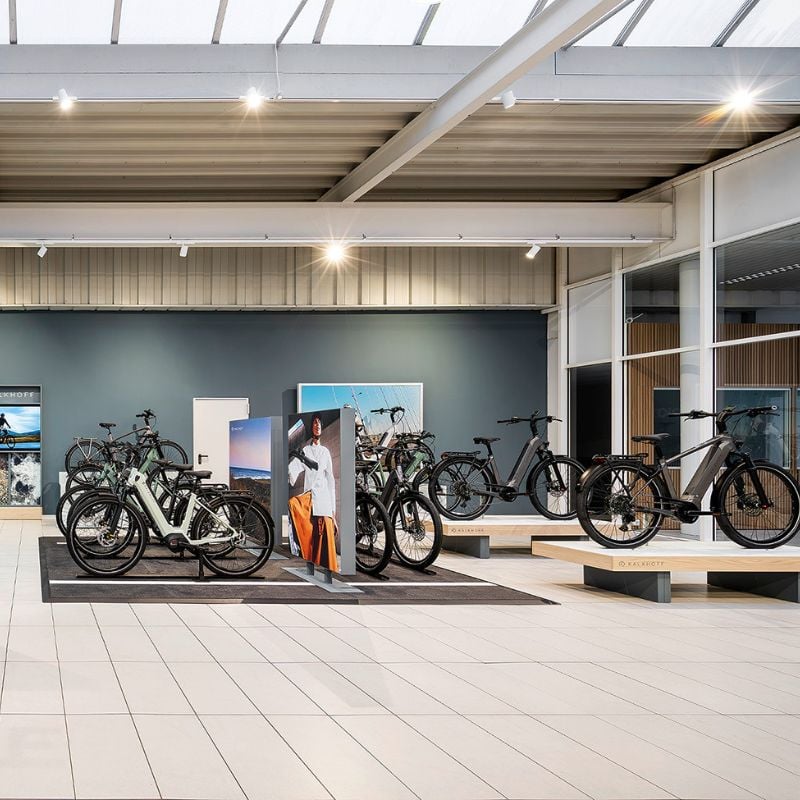
Are you looking for a new Kalkhoff e-bike and would like to see the different models in person or try them out for free first? No problem!
ADVICE
Everything you need to know about e-bikes. From technology and purchasing to daily use.
DEALER SEARCH
You can easily find a specialist dealer near you using our dealer search.
KALKHOFF WARRANTY
Register your Kalkhoff e-bike and enjoy a 10-year warranty on all e-bike frames.